
Tampa Review
In which I play around with novel characters before starting a novel

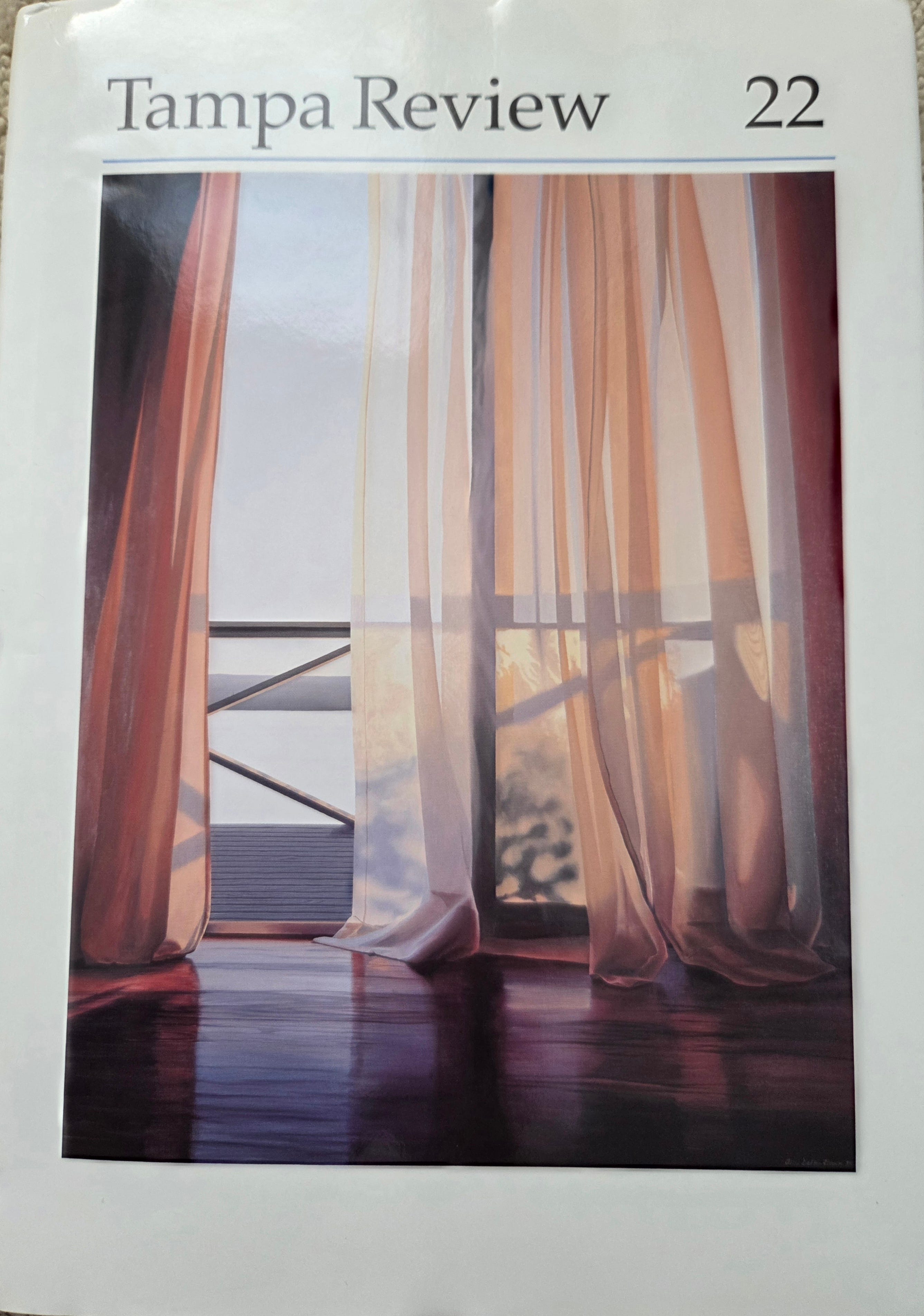
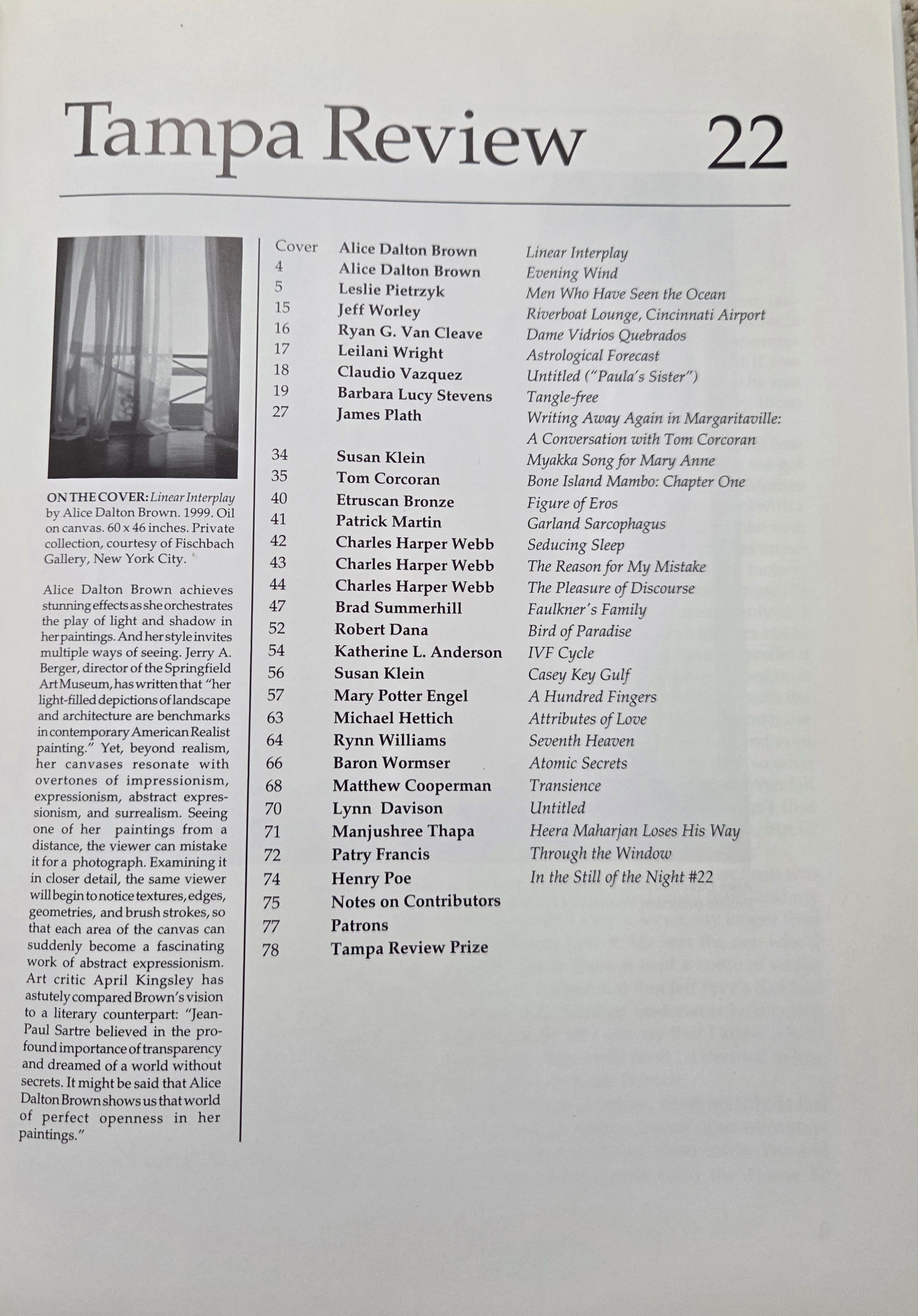
Tampa Review #22 (2001) includes my story “Men Who Have Seen the Ocean,” a decent title for me in those days of self-inflicted titling woes (TOC below). This is the only time my work has appeared in Tampa Review, though not for lack of trying, and one of the reasons I kept and keep trying is that this might be only HARDCOVER literary journal I’ve ever seen. Yes, HARDCOVER. With a glossy dust jacket. Perfect-bound. Green cloth and embossed in gold on the front cover AND the spine:
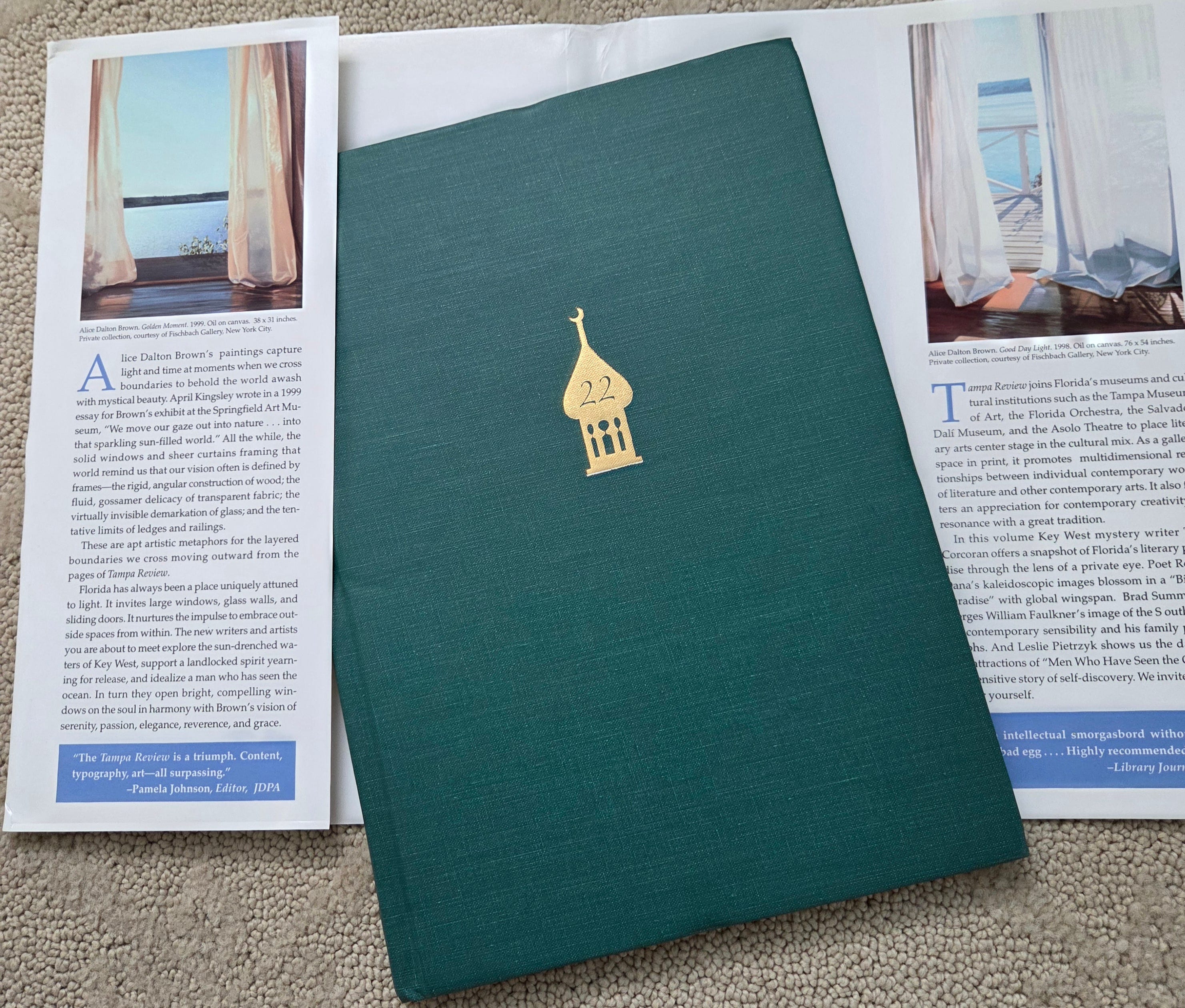
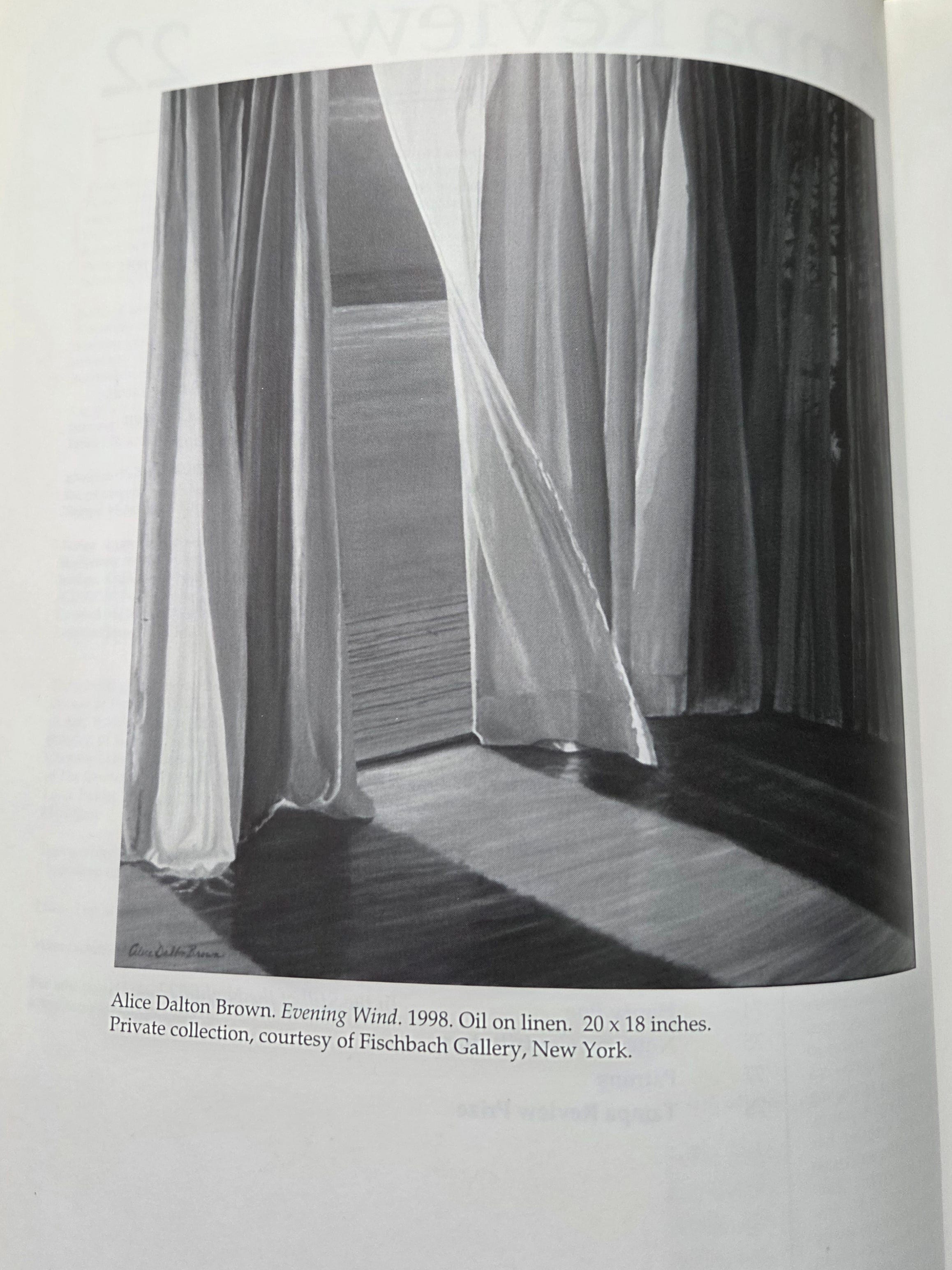
It’s a work of art—obviously part of the journal’s mission then, and today, as b&w artwork is included throughout the pages. According to the website:
The design of our printed journal embraces a tradition of excellence in book arts hearkening back to illuminated manuscripts. The editors believe that contemporary works resonate most powerfully within a great tradition. As a gallery space in print, Tampa Review promotes awareness of multi-dimensional relationships between outstanding contemporary literature and contemporary visual arts.
Delighted that University of Tampa continues to produce the journal, but it’s unclear to me if the journal continues to be printed as a hardcover; the current issue is $25, so maybe? If you know, please drop a note. Either way FOR SURE I’ll be sending in work when they open for submissions in September.
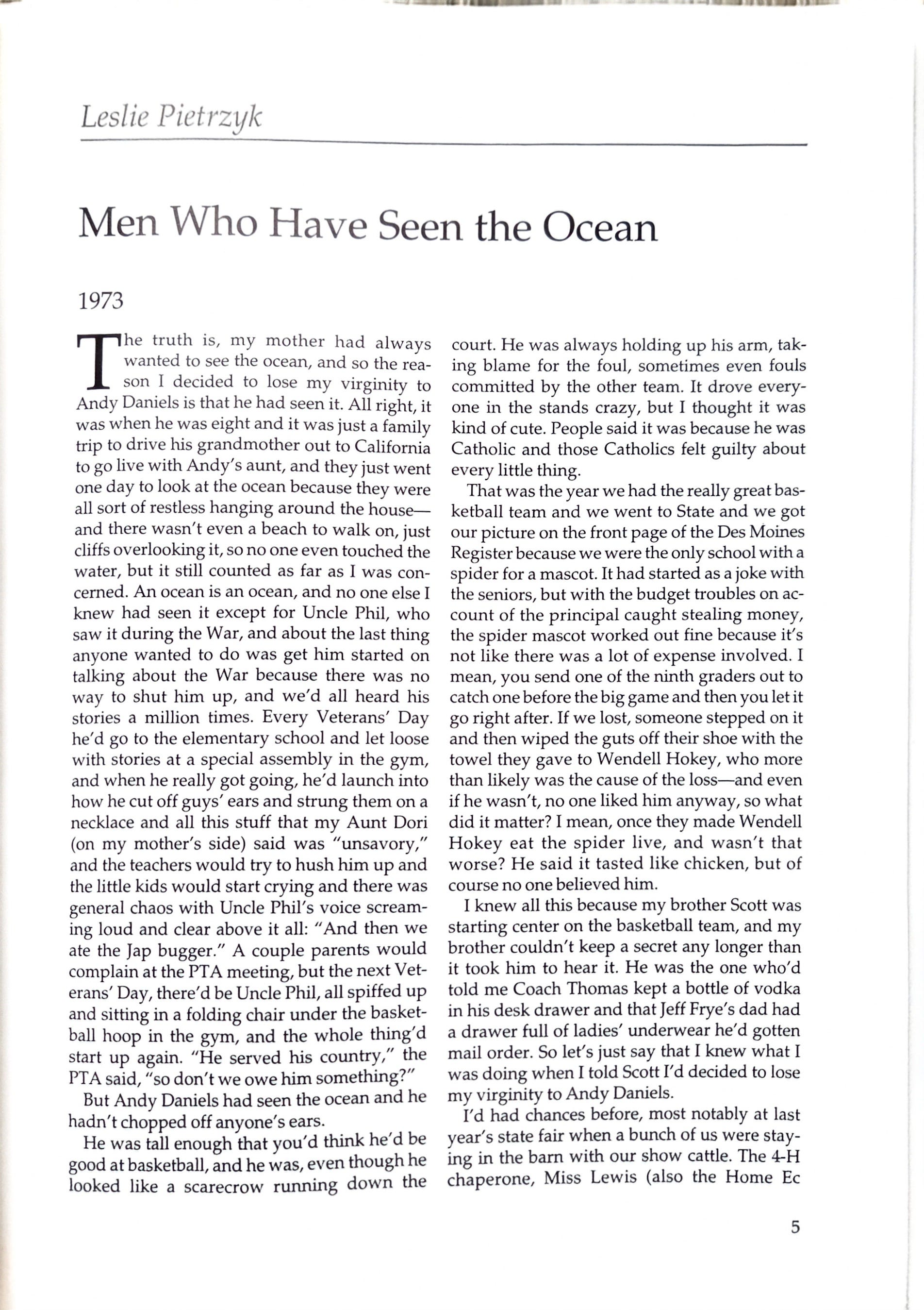
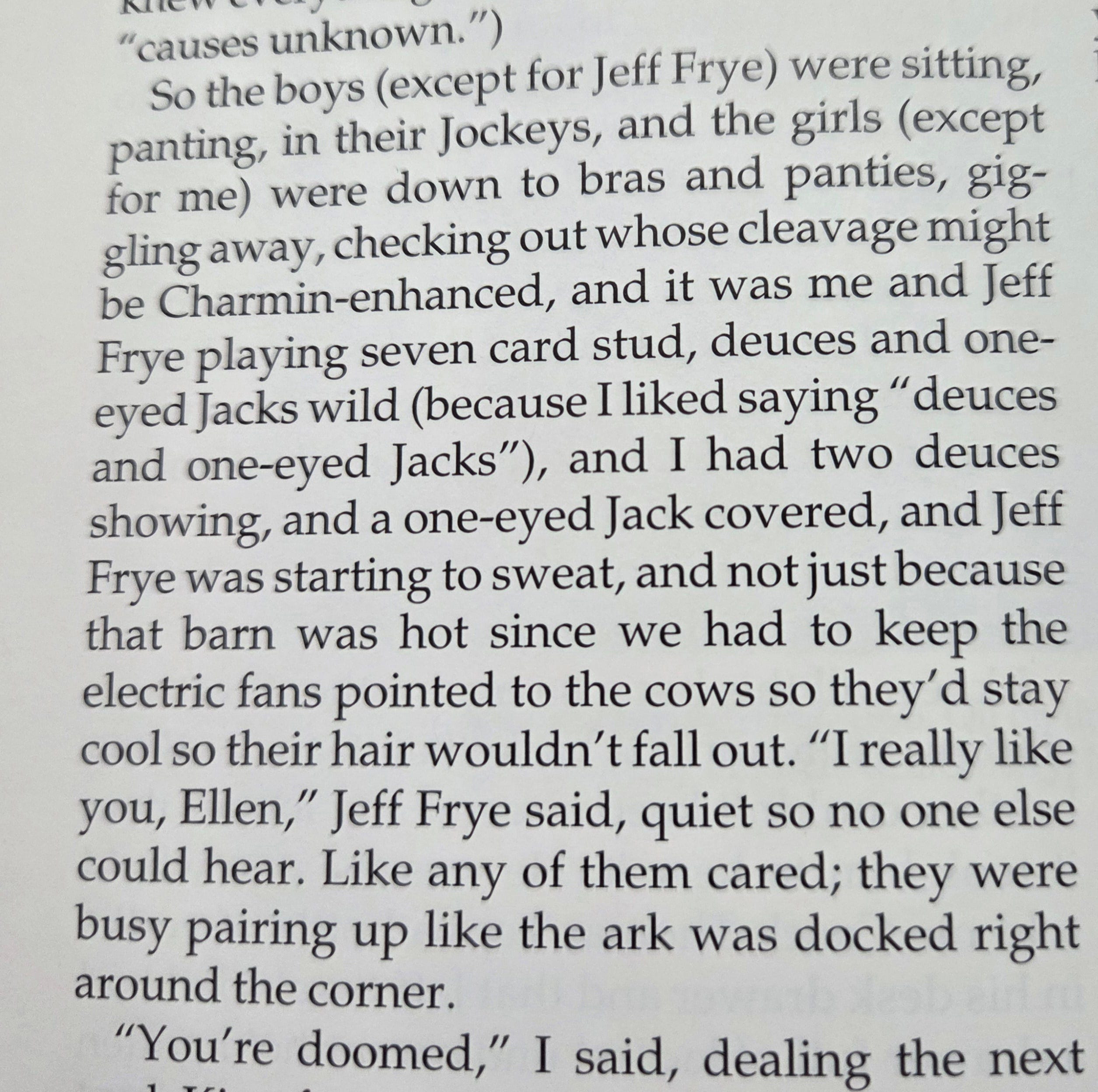
My story’s set in small-town Iowa in 1973, about a high school girl who announces she’s going to lose her virginity to a boy who (guess what!) ends up being gay—despite the fact that there’s another boy who likes her. She doesn’t choose that boy because he’s never seen the ocean, which represents a failure of imagination and possibility and because her mother who died by suicide yearned to see the ocean. In spite of this description, there’s a lot of humor, and I absolutely love Ellen’s first-person voice.
I loved Ellen’s voice so much that it pretty much became the voice of Alice, the first-person narrator of my second novel, A YEAR AND A DAY. The whole story, in fact, was a study for the characters who populate that book: a brother and sister, their missing mother who died by suicide, a wacky and emotional aunt taking care of them, two best friends, and the brother’s friend providing romantic interest. The story here has some extra characters: a wacky uncle and a grieving father. I think those characters are fine for this story (I guess; the uncle provides both humor and convenient wisdom), but it was clear to me as I approached the novel that I couldn’t keep all those people because they’d all need resolution. Can’t have a father who’s sad on page 1 and still sad on page 300; he would need a storyline in a novel. And why would a book need a wacky aunt AND a wacky uncle? Kill those darlings! My book is better for their absence, and it’s possible this story would have been as well, but this is clearly a story where I was enjoying the voice so, so much that I went off on tangents just for fun, and I’m grateful the editors let me.
In the end, this story is about secrets and people trying to find ways to connect, which I’m sure I could say of 90% of my stories, especially these older ones. I’ve heard a writer only has one story they write over and over again, and to an extent, I think so. Or, I thought so for a long time, and maybe now I think that over time a new story may evolve, and now there’s something else being told over and over.
For fun: because the story is set in 1973, I was excited to see flashcubes show up when the aunt takes a picture. Photography these days is far too seamless, and I miss being bombarded by burning dots in my eyes, proving something eventful has happened. I was also amused that there’s a scene at a movie theatre concession stand, and the worker gets extra cups from exactly the same cupboard I got extra cups when the hordes were pressing in on a busy Saturday night. Reading that teeny-tiny #secretscrapbook detail put in my head the image of the 75 cent size of orange and black striped cups, their waxy coating, the snap of a plastic lid crushed on just right, how we cleaned the pop machine when the boss was cranky so we’d look busy, etc. etc.
I sent this story only to three other places. I can’t say this is a “rule,” but maybe just something to think about: a well-done voice in a story can usually overcome a few flaws. I’m surprised at how much I enjoyed re-reading this story all these years later, and I’m impressed it got picked up so quickly.
I love the artwork accompanying my story, and I’m delighted to see that the artist, Alice Dalton Brown, is still at it.
I love how self knowing you become over time—how reading yourself again teaches yourself today.
Yes, Leslie! Let’s bring back the flash cubes,!
Thanks! I enjoy your work and descriptions of your work so much!