Shenandoah #2
In which I learn the benefit of editors who edit

I wrote last week about an enduring literary relationship I’ve had with the (fabulous then, and still fabulous) journal Shenandoah, out of Washington & Lee University in Lexington, VA. The old mailing address back in the days of yore was to the “Troubadour Theatre,” which I hope, hope, hope is where the journal continues to be housed. Couldn’t find confirmation on the website, but I did learn that the journal was founded in 1950 by a group of students that included writer Tom Wolfe: is a pretty stellar beginning. (Also goes to show the importance of “just starting something.”)
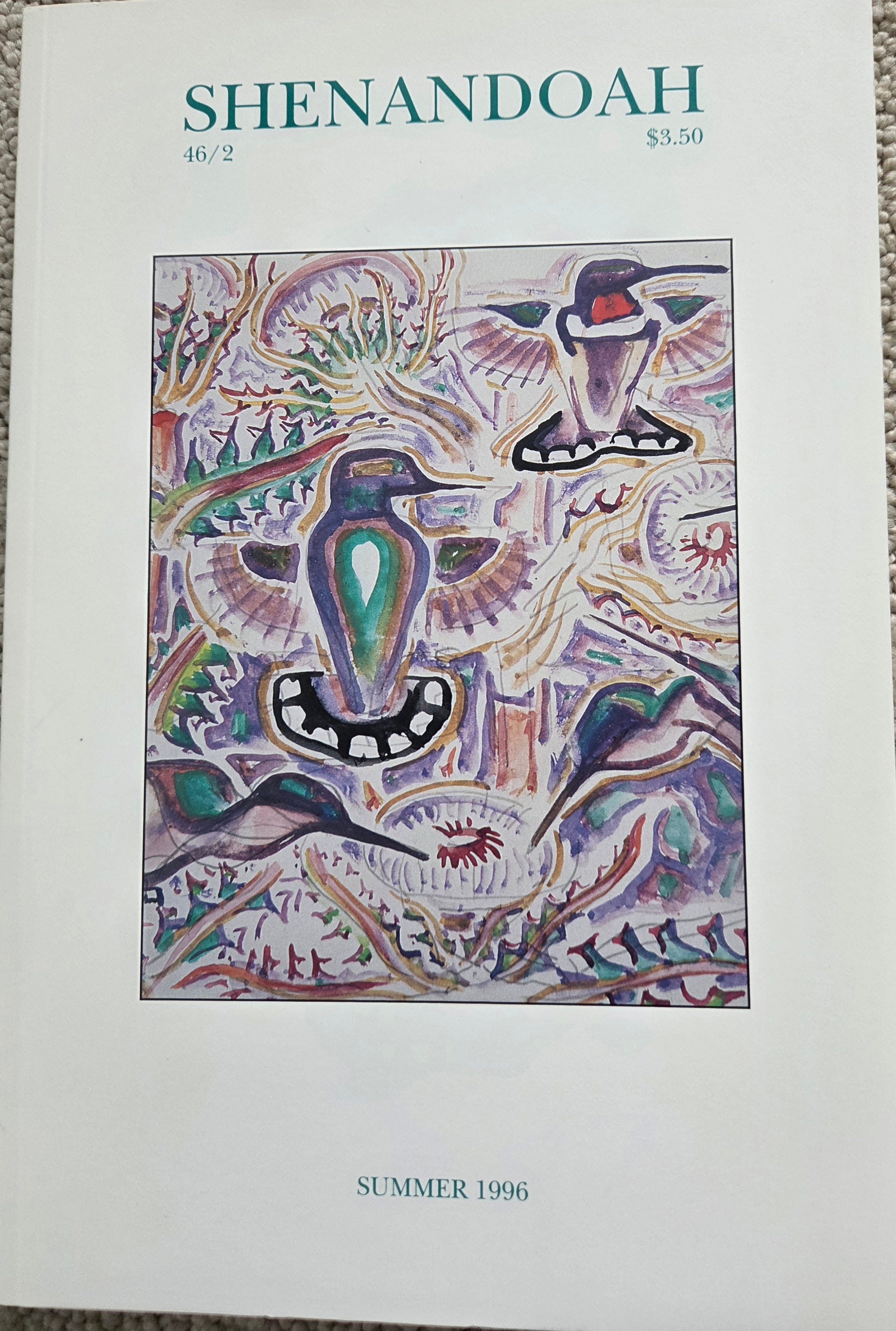
This story—“Things Women Know”—is the first time my work appeared in Shenandoah, despite many previous submissions. I was thrilled! This is also an example of a time that taught me the benefits of sending work to journals where editors edit and take time not only to read the work, but to suggest improvements.
In this case, the editor R.T. Smith suggested this title, which I immediately preferred (and also sensed I clearly should prefer). I work much harder at titling these days, but back then I thought of myself as being terrible at titles, which I was, as my original title for this story was (and I wish I were joking): “Pins. Helen. Lace. February. America.” I feel lucky these people even read this story if that’s what hit them first! I don’t think my work had been edited much, and there’s an art to knowing when/how to listen to a lit journal editor’s suggestions, and I’m glad my entry into this world was gentle.
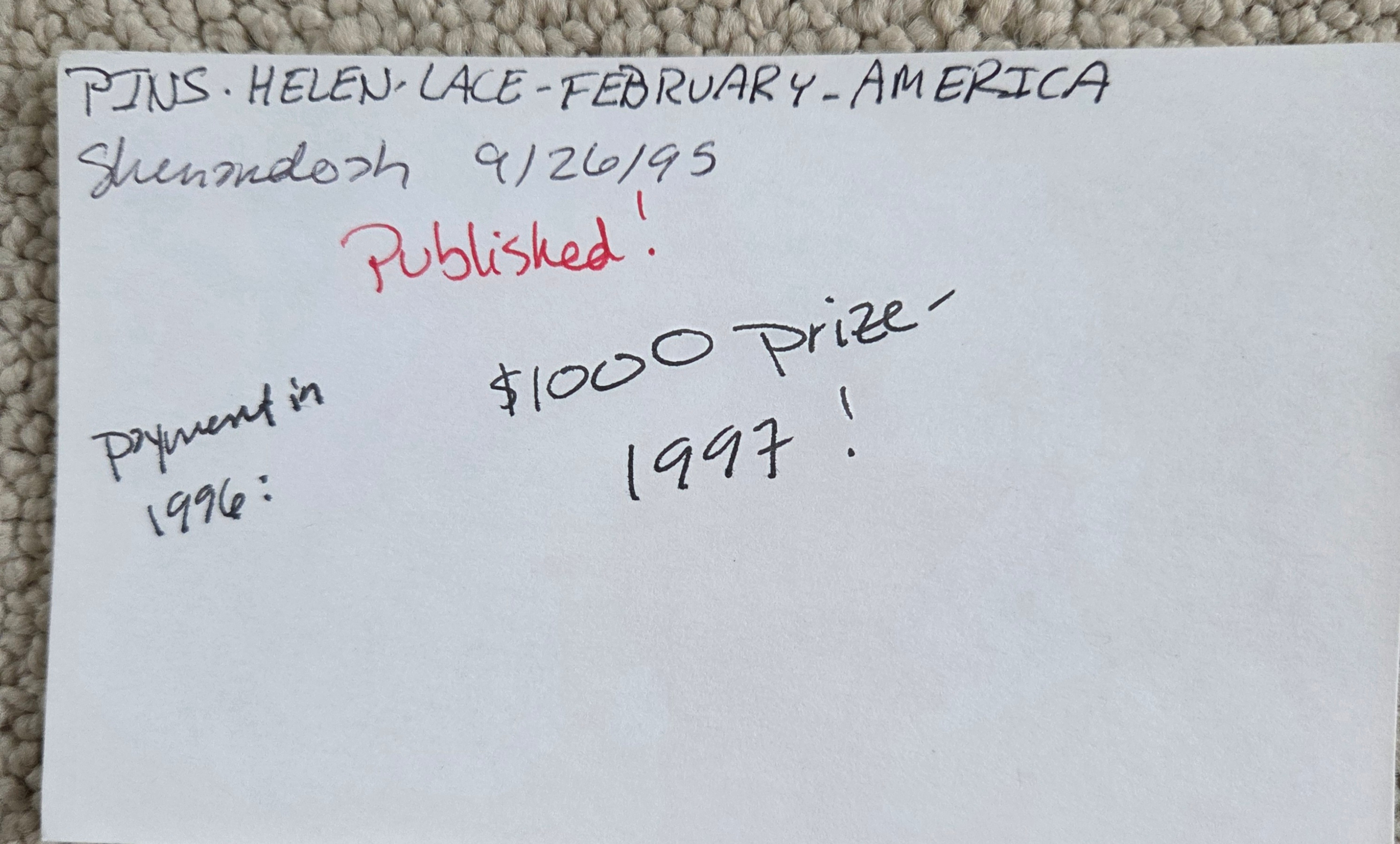
Also, looking up my trusty index card*, I see that this story went first (and exclusively) to Shenandoah, and was accepted--!! (Wouldn’t mind if that happened more often.) In another stroke of exciting luck, my story won the Jeanne Charpiot Goodheart Prize for the best work of fiction published through the year and won $1000. (Wouldn’t mind if that happened more often either.)
I don’t have to tell you how encouraging such attention is, especially as this all happened during the time period I was working on what would become my first (published) novel, PEARS ON A WILLOW TREE. *Still use these index cards to track submissions!
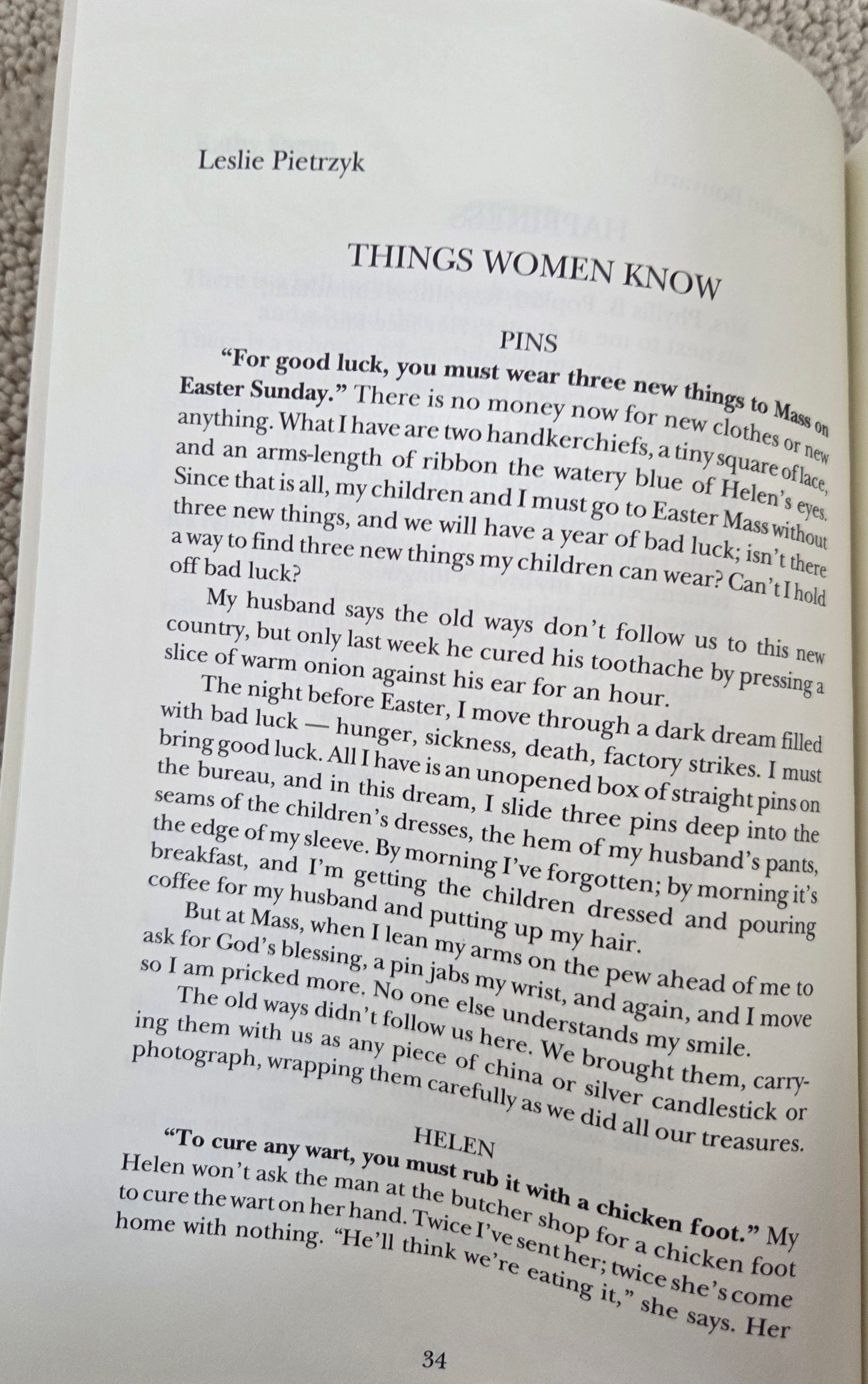
Back when I was promoting PEARS ON A WILLOW TREE one of my favorite pieces to share at a reading is the section with the subtitle “Helen.” Because I often write long, I’m always delighted to have something dramatic to read that clocks in at 4 minutes. (Hint: NEVER go over your time at a reading!! You’ll be despised for eons—ask me about the person who went over in my big group reading at Bread Loaf! I still know this name!) My favorite line to read, always, was “So I went to the butcher.” You just know nothing good is about to happen, right? I also loved reading that list of food!
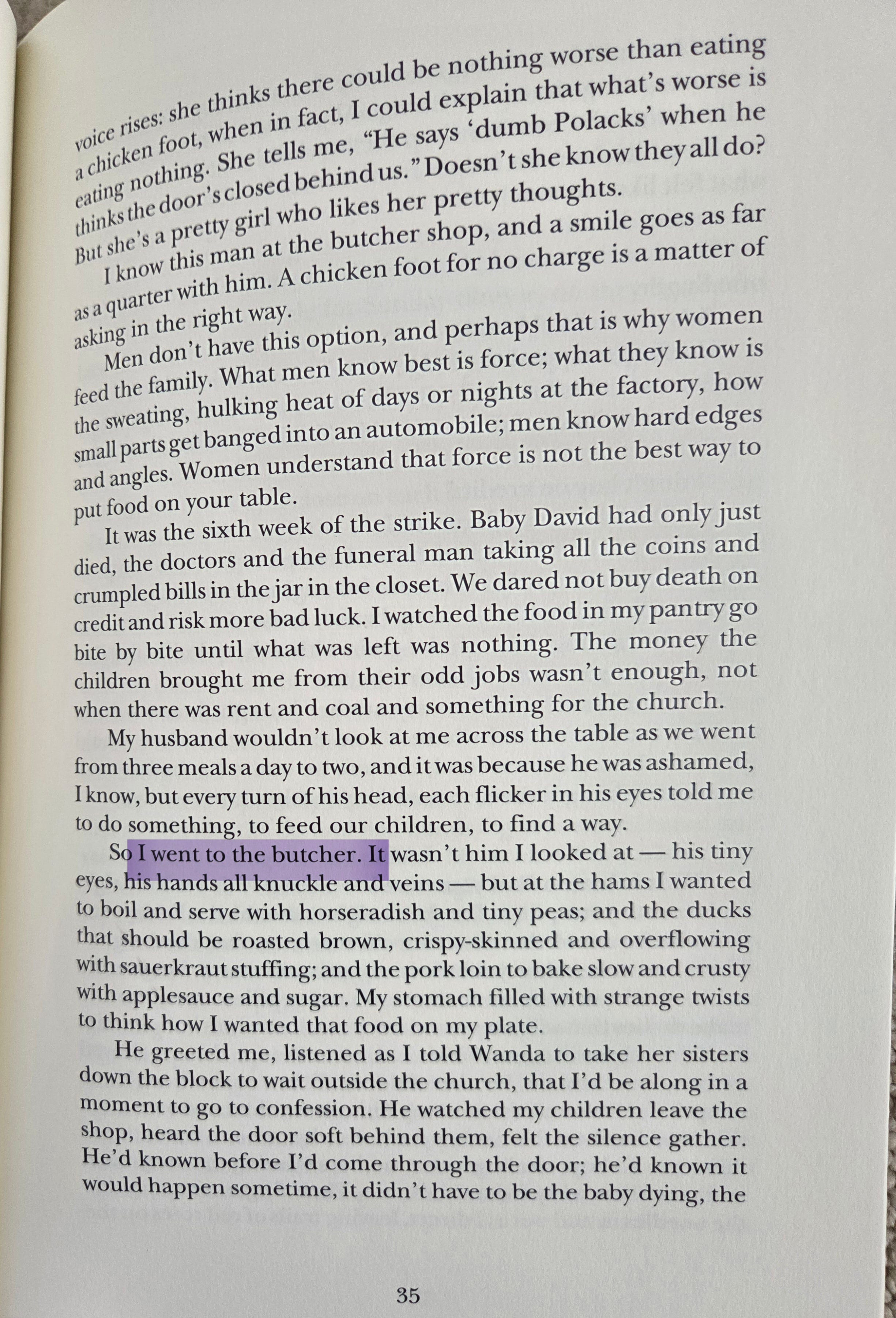
This may be one the earlier times I experimented with form, as the story is composed of five vignettes, each based on an old-world aphorism that (I felt) might be known by the Polish mothers and daughters I was writing about. Each saying that starts the section is something I discovered in my (pre-internet) research.
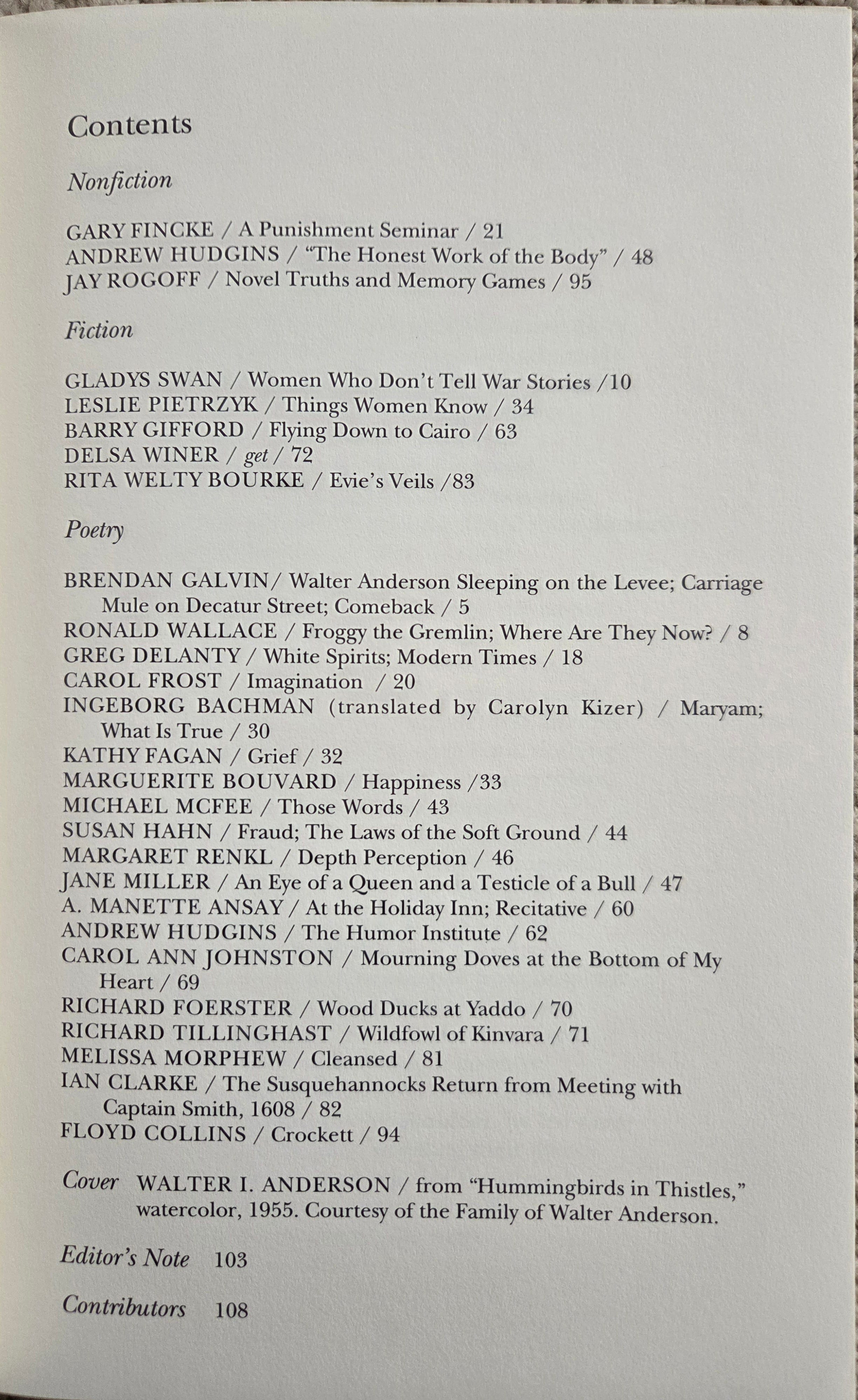
Plenty of interesting names in this TOC, including a poet I met at VCCA and am still friends with, Richard Foerster, and Richard Tillinghast, with whom I taught for many years at the Converse University low-res MFA program. M. Annette Ansay wrote a novel that remains on my “Favorite Books” bookshelf, VINEGAR HILL, an early Oprah book. Barry Gifford would have been familiar to me at the time. I really wanted to like the movie made from his novel WILD AT HEART, but I just…didn’t. Likely I wasn’t cool enough, and likely I’m still not.
Star by my name to show I’m a first-time contributor, and here’s my reminder that yes, a relationship with an editor is great, but also, every good editor is always, always, always excited to find something and someone new. We have to believe that, right?