
Confrontation
In which I wrestle with the unknown over hot and sour soup and take a stab at magical realism

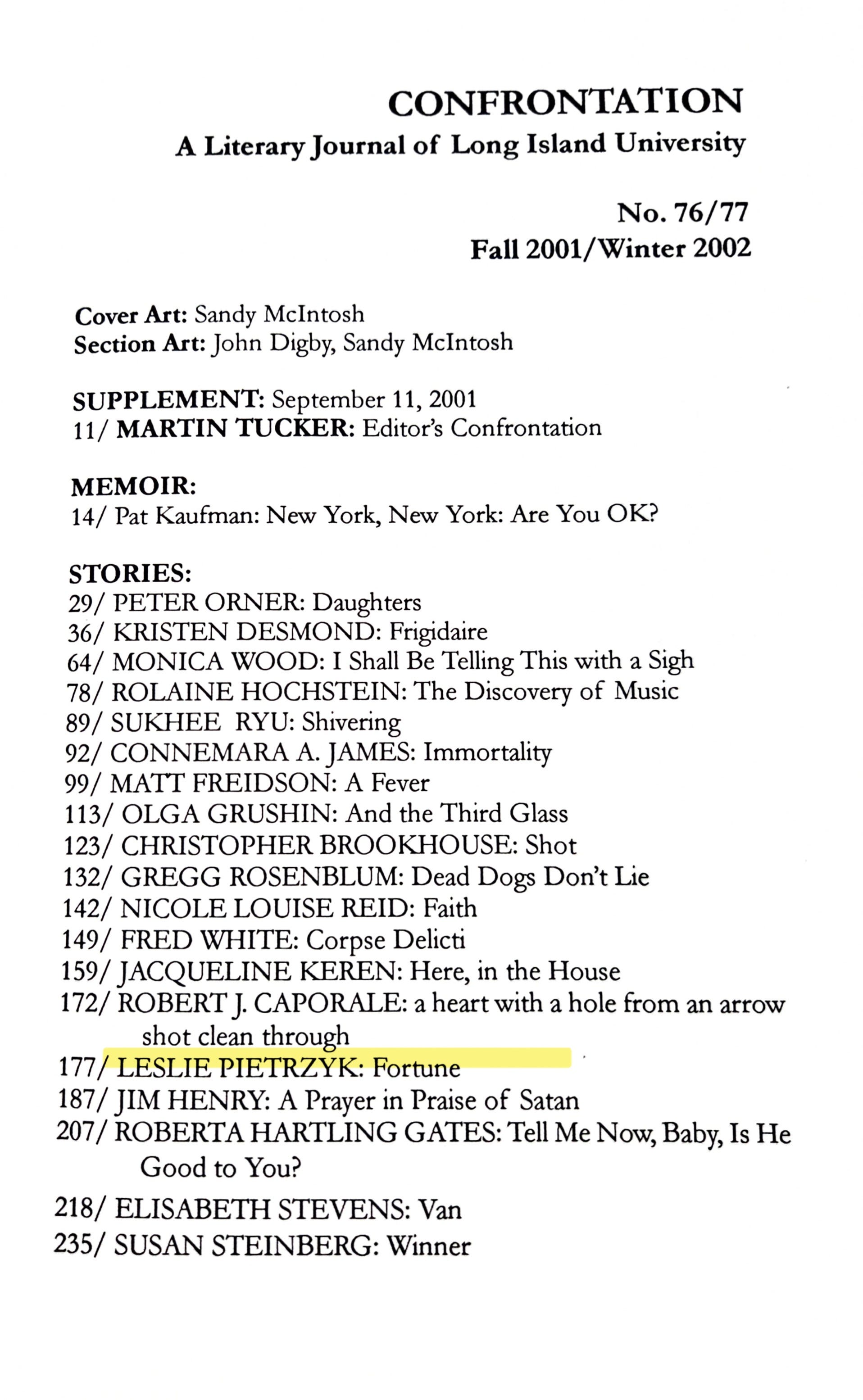
“Fortune” appears in the Fall 2001/Winter 2002 issue of Confrontation (No. 76/77). The issue is 354 pages long (!!!) and features a short section on 9/11, or as people tended to call it back then, September 11th. I don’t know if this issue was delayed and so turned into a double issue or if a journal of this heft was standard practice. The journal’s out of Long Island University (New York), so the former makes sense. Hard to imagine caring about putting out a literary journal after that horrific event, yet that’s what one does, right?
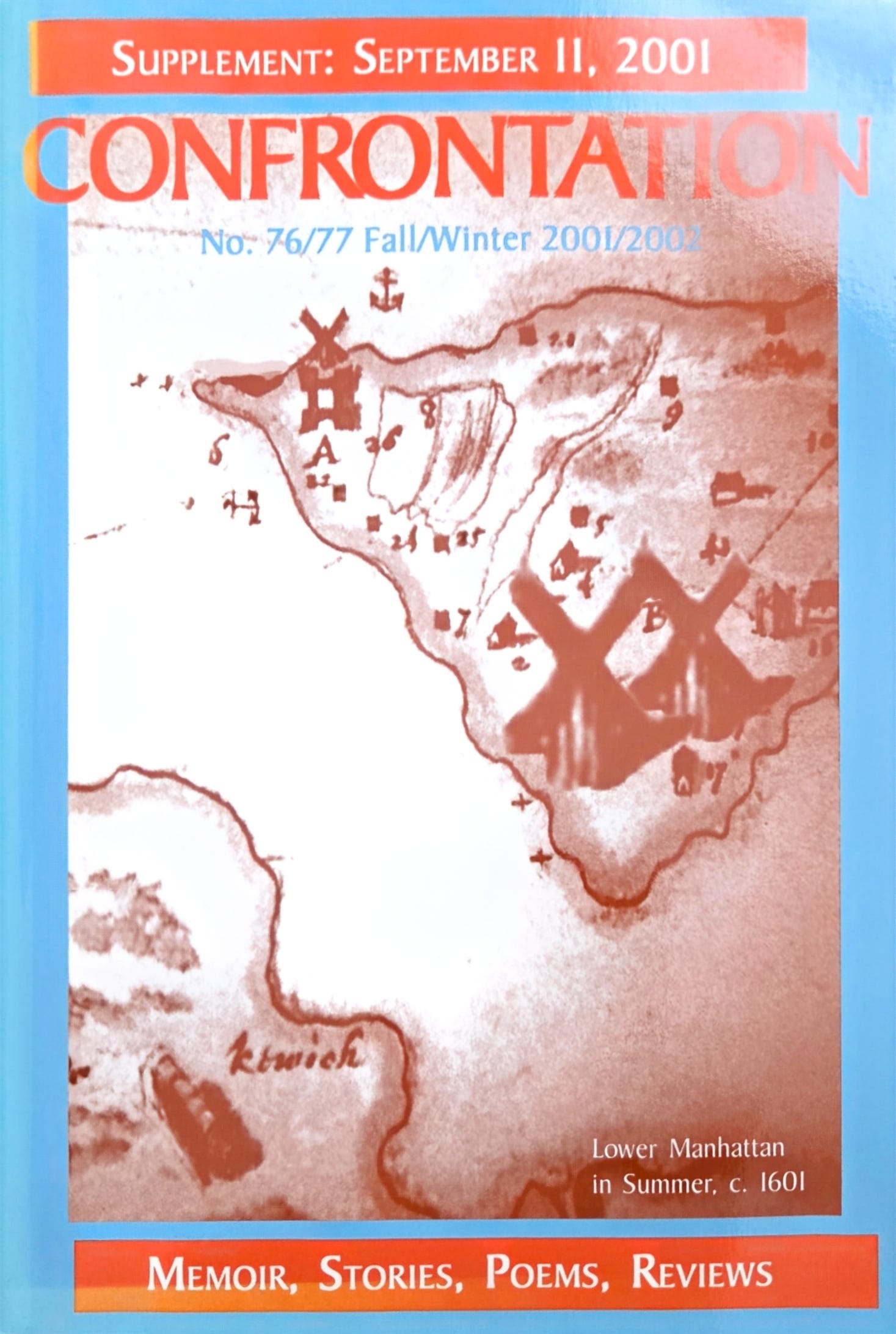
Confrontation was founded in 1968, and the current website features some lush artwork. But then I saw this line in the submission guidelines:
For all submissions, please be sure not to put two spaces after a period.
As suspected, when I clicked on the Submittable button, the journal noted it would be open for poetry submissions in September 2021. Ugh. Another one bites the dust, and I wonder who’s paying the bills for the webhosting etc. of this zombie/dead mall lit journal site.
(Remember when we old-timers were all worried about that 2-space issue, unlearning a habit drilled into us back in typing class? If only Twitter had been around then so we could get into Capital-D Discourse on one space vs. two!)
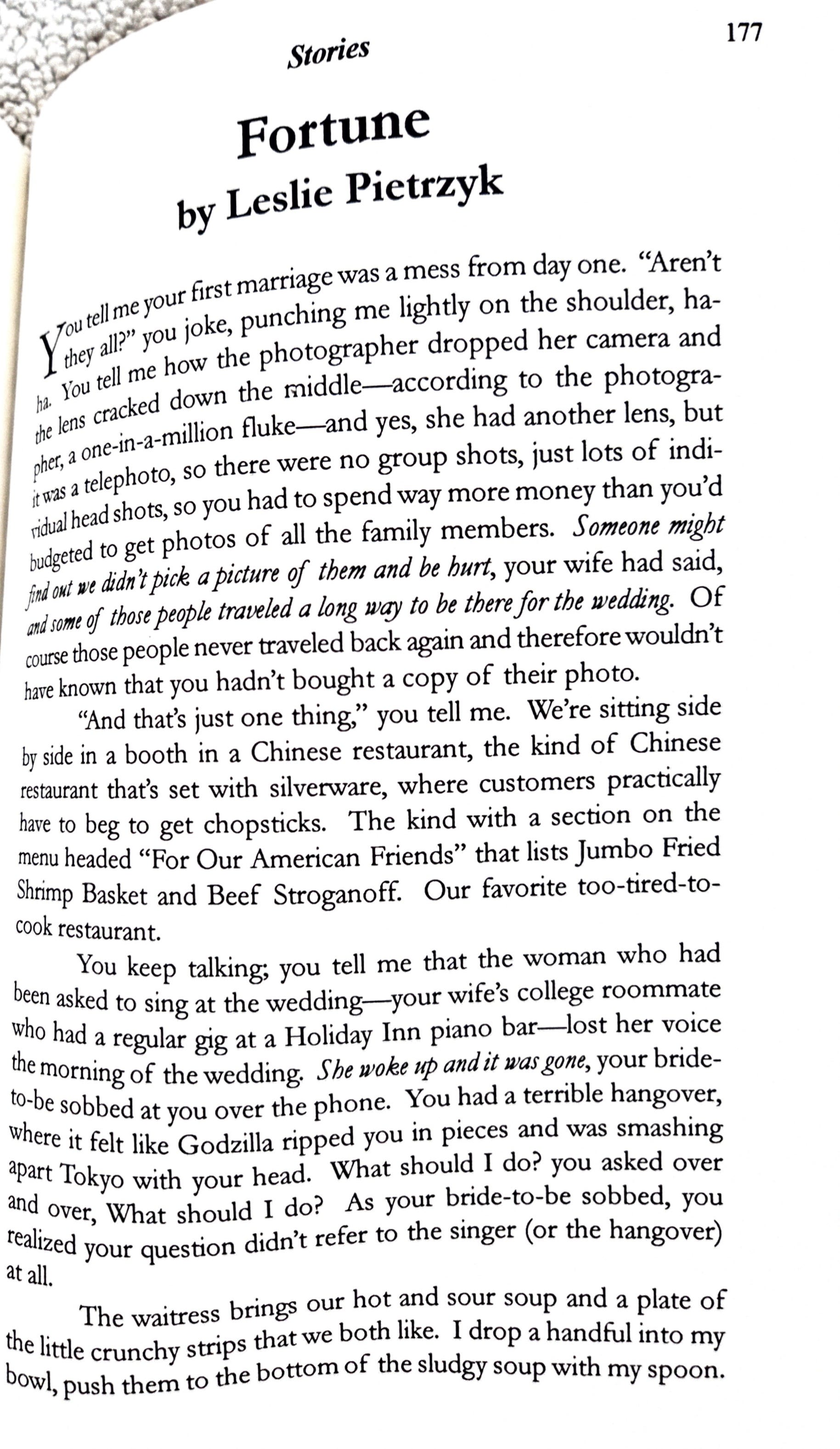
Pulling this journal off the shelf and looking at my story’s title in the TOC brought no memory of this story—though I suspected it would be set at a particular Chinese restaurant in Bethesda, Maryland, where I used to eat early dinner by myself before teaching evening classes at The Writer’s Center. I was right, and reading the story got me yearning for a bowl of the hot and sour soup the narrator’s eating. (Oddly, I’ve set several stories in this exact restaurant, and someone always orders this soup.)
In the story, the unnamed, 40s, never-married, female narrator is having dinner with her boyfriend of “eight months, one week, and four days.” He’s divorced, and she’s asking him about his previous marriage. He’s hedging, instead telling her funny stories about all the things that went wrong at their wedding, and she tries to bring him back to marriage. Basically, she wants to know what it would be like to be married to him…which, of course, can’t be known.
I want to know what it’s like to be married to you. If I know, everything will be clear.
Stay with me here, because then she surrealistically travels through time and space (as her soup gets cold!) to be a fly-on-the-wall witness to an ordinary Sunday morning breakfast he and his perfect wife share, mostly pleasantly, until the toaster catches on fire. (It’s impossible not to believe Our Town didn’t have some influence here! I start crying when Emily goes back to Grover’s Corners on her birthday and am sobbing when the curtain falls.)
In the end, back at the restaurant, the couple opens their fortune cookies, and the narrator’s is blank, a “dud,” she says. “So we’ll make our own fortune,” the boyfriend says, coming through in the end. A hopeful ending for these two crazy kids!
I don’t remember writing this story specifically, but I know that at the time it was written, I had been out in the dating world after the death of my first husband. Finally, I was with a guy I considered special. But what would it mean to get married? How could I be married to someone who wasn’t the husband I already had? It’s one thing to marry someone when you’re young and foolish, not knowing all the things that can go wrong…but when you’ve been battered by the world? How do you know?
So that’s what I was writing about, though zero specific details of the couple’s story are true…except one: The narrator observes, “Your hands are always warm, even in the middle of a snowstorm.” This is exactly what I noticed—and what is still true—about that special guy who I will have been married to for twenty years next week.
There’s an intriguing point-of-view choice here that I’m not sure works because it’s a little hard to follow. The unnamed woman tells the story in the first person, but she addresses the man only in the second person/ “you.” (No name for him either.) That creates distance, indicating the narrator maybe isn’t sure about this guy—but it’s super-hard to read when we’re in the section where the narrator is observing the man/ “you” and now we also have that first wife (“she”). I don’t know. Maybe this choice helps sell the shift into a time/place the narrator couldn’t possibly be in—because the reader is led to believe she actually and literally saw a real-life breakfast unfold; she brings a detail into the conversation at the Chinese restaurant which is accurate. I like the boldness of my POV choice, but I’d hate to read a longer story in this style. I would never have said that I tried writing magical realism, but look! I did.
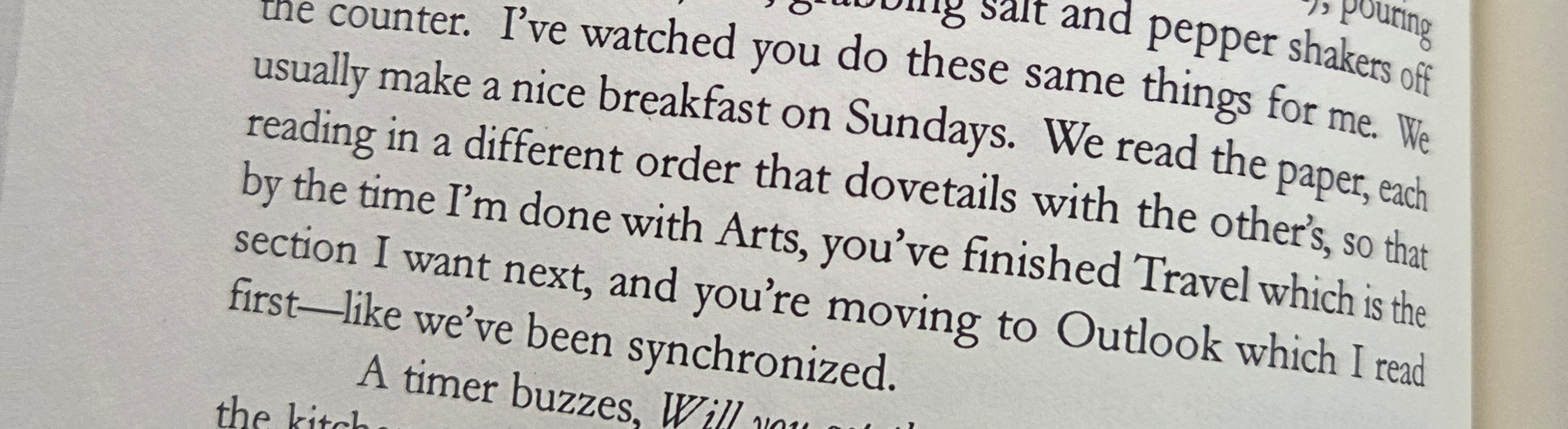
I love this description of reading a newspaper together (and I’m still furious that the Washington Post has been decimated in modern times):
Finally, I was reminded of what someone once told me about a Contributor’s Note, to always, ALWAYS say you’re working on a novel (or collection), because maybe an agent will call you up, wanting to read that novel!
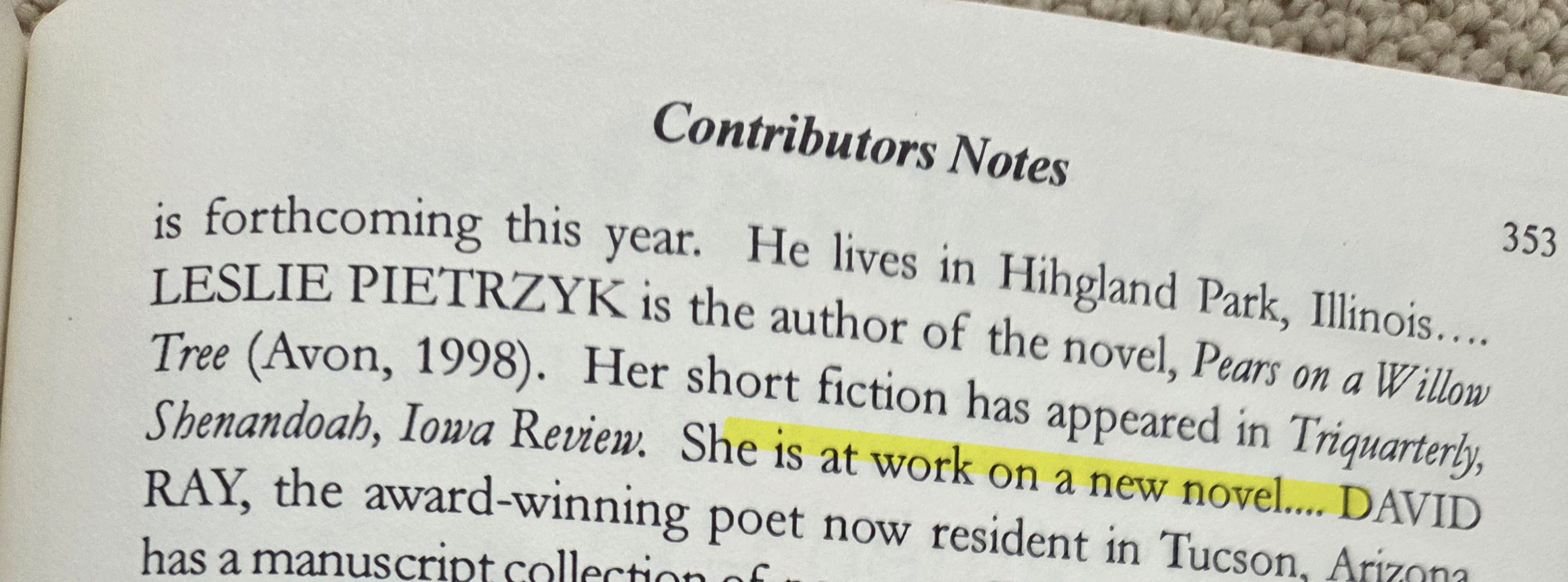
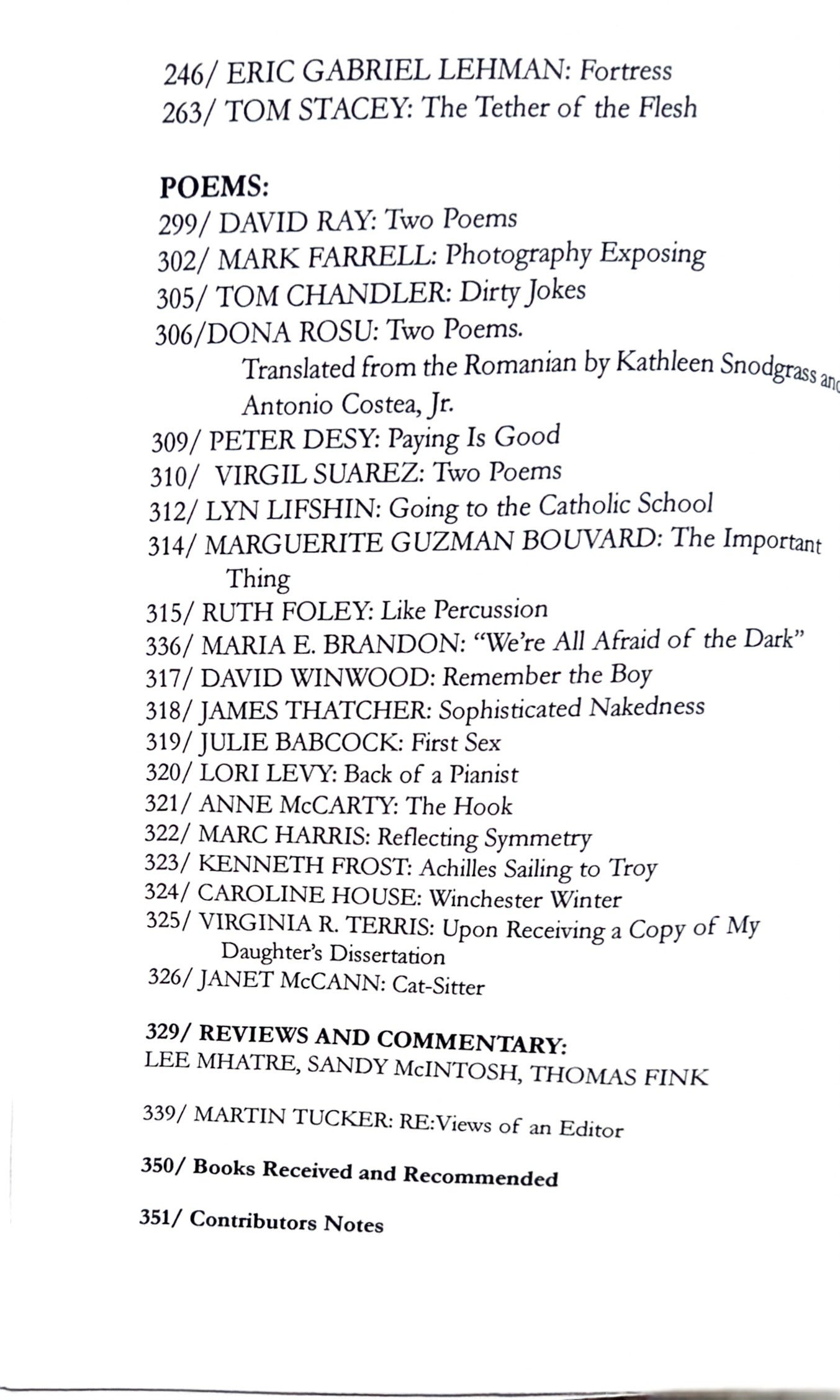
Table of Contents (I like that they list Books Recieved/Recommended…more journals should do that):
Happy anniversary to you and your special guy!
Do you think that Monica Wood is the one who wrote "How to Read a Book?